Building a Practical Uniform Range for Manufacturing and Industrial Teams
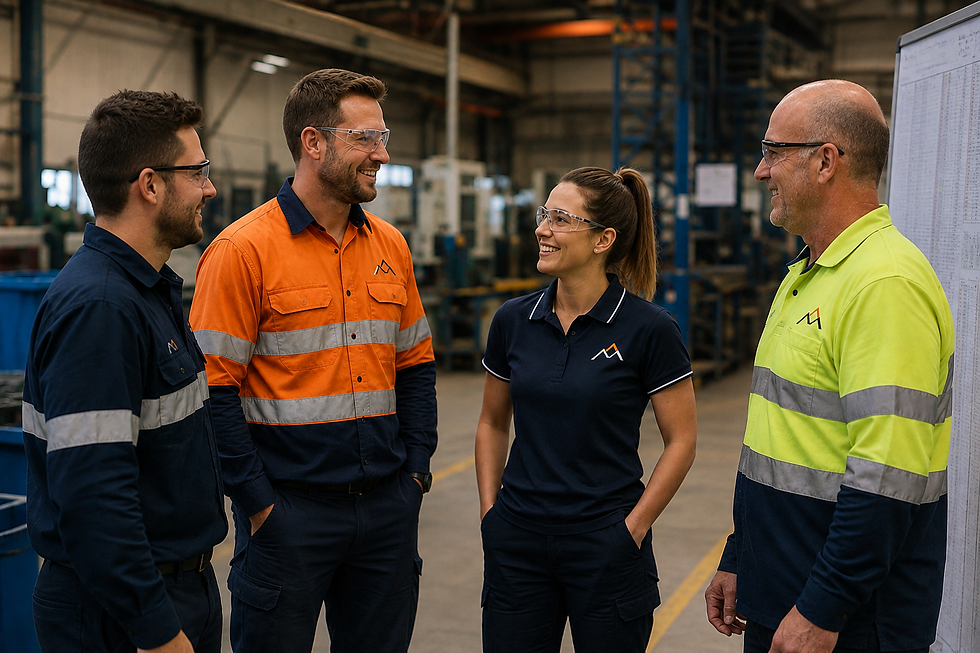
A manufacturing business rarely has one type of employee doing one type of job. The office team may need polished polos or business shirts. Production staff need practical workwear. Warehouse teams need durability and freedom of movement. Field staff may need hi-vis, weather protection or tougher outerwear.
The challenge is not finding one garment that works for everybody. It is building a coordinated range that gives each part of the business what it needs while still making the whole team look like one organisation.
Start With the Workforce Map
Before looking at garments, it helps to map the different working environments across the business. For many manufacturing and industrial organisations, that might include:
office and administration
production or workshop
warehouse and logistics
field or service technicians
supervisors and managers
Those groups may overlap, and not every business will have all of them. The point is to think about what people actually do during the day rather than starting with job titles alone.
Someone who spends half their week in the office and half on the factory floor may need a different uniform solution from someone who works entirely at a desk.
What Each Group Actually Needs
A useful manufacturing uniform range often has several layers rather than one universal garment.
Office and customer-facing staff
These roles usually need a more polished presentation without becoming overly formal.
That might mean:
polos
business shirts
lightweight jackets
neat branded outerwear
The goal is professional presentation with enough comfort for everyday wear.
Production and workshop teams
Here, practicality comes first. Garments need to cope with movement, repeated washing and the physical environment of the job. Depending on the workplace, that might include:
work shirts
durable pants
polos
jackets
hi-vis garments
warmer layers for cooler areas
Warehouse and logistics
Warehouse teams often sit somewhere between traditional workwear and lighter teamwear.
Comfort, movement and durability matter, but the environment may not require the same garment as a workshop or field crew.
Field and service teams
These employees often represent the business away from the main site, so the uniform needs to work both practically and visually. That can mean combining:
durable workwear
hi-vis where required
weather-resistant outerwear
branded polos
coordinated jackets
Supervisors and managers
A different garment can help distinguish responsibilities without making managers look disconnected from the broader team. A supervisor may wear a polo or shirt in the same colour family as the production team, for example, rather than moving into an entirely separate corporate wardrobe.
Consistency Should Come From the Brand, Not Identical Clothing
This is where industrial uniform ranges can go wrong. Consistency does not mean every employee has to wear the same polo. It means the different garments still clearly belong together.
That can come from:
a shared colour palette
consistent logo treatment
complementary garment styles
common outerwear
repeating brand colours across different departments
A navy polo in the office, navy work shirt in the workshop and navy-and-hi-vis garment in the field can still create a strong visual connection.
The uniform range should make sense when people from different departments stand together.
Where You Should Not Force Consistency
There are times when making everyone match too closely creates a worse result. A garment that looks excellent on office staff may simply be wrong for someone working around machinery. Likewise, heavy workwear may make no sense for an administration team sitting indoors all day.
Different body shapes and fit preferences also matter more across a large workforce.
The better approach is usually to create complementary options rather than forcing one product across the entire organisation.
That keeps the brand consistent without making the uniform impractical.
A Practical Example
Imagine a manufacturing business with 80 staff across office, production, warehouse and field service. A coordinated range might look something like this:
Team | Core garments |
Office / administration | Navy polo, business shirt, lightweight jacket |
Production | Navy work shirt, work pants, heavier jacket |
Warehouse | Polo, durable pants, lightweight outerwear |
Field service | Hi-vis work shirt, work pants, weatherproof jacket |
Supervisors | Polo or work shirt in the same core colour family |
The logo treatment remains consistent across the range. The office team does not need to look like the workshop team, but there is an obvious visual connection between them.
Think About the Range as a System
One of the most useful shifts for a larger industrial business is to stop thinking in terms of individual products. Instead of asking "Which polo should we buy?", ask "What range of garments do we want to keep using over the next few years?".
That changes the way products are assessed. A garment is no longer just judged on how it looks today. You also start considering:
whether it can be reordered reliably
whether complementary styles are available
whether the colour works across other garments
whether it suits different fits
whether it can support winter and summer options
whether the branding works consistently
That tends to produce a much more stable uniform range.
Product Continuity Matters
Manufacturing and industrial businesses often reorder throughout the year rather than placing one annual uniform order. That makes product availability important.
A garment that is heavily discounted today may not be particularly useful if it disappears from the supplier range six months later. No supplier can guarantee that every product will remain available indefinitely. But for an ongoing uniform program, established ranges and reliable suppliers are usually a better foundation than constantly chasing short-term specials.
Durability Needs to Match the Job
Not every employee needs the toughest garment available. That sounds obvious, but it is easy to over-specify workwear. A workshop team may genuinely need heavier fabrics and rugged construction. Of course, an office employee probably does not.
Choosing durability based on the actual working environment can improve comfort and keep the overall budget sensible. It also avoids the mistake of treating “industrial business” as though every employee does the same type of physical work.
Think About Branding Early
The garment and the branding method need to work together. Embroidery may be a strong choice for polos, shirts and jackets, while some garments or larger artwork may suit printing better.
Logo size, fabric type and garment construction can all influence the finished result. The branding should feel consistent across the range even when the method changes.
Seasonal Layers Should Be Part of the Plan
Industrial uniform ranges can sometimes look coordinated in summer and then become inconsistent in winter. That usually happens because outerwear was added later.
If winter garments are planned from the beginning, the range can include appropriate options such as:
softshell jackets
heavier work jackets
fleeces
hi-vis outerwear
rainwear
Again, not every employee needs every item. The benefit comes from knowing which products are approved before cold weather arrives.
Fit Across a Larger Workforce
The larger the team, the less realistic it becomes to expect one garment shape to suit everybody. A good range often uses complementary men’s, women’s and unisex styles that share similar colours and branding.
This is particularly important with polos, shirts and jackets. The aim is to preserve a consistent visual identity without sacrificing comfort. Employees are also far more likely to wear uniforms properly when they feel comfortable in them.
What Good Looks Like
A strong manufacturing uniform range should make a few things easier at once. People should have garments that suit their job. Different departments should still look connected.
New starters should be easier to outfit.
Reorders should not require starting from scratch. Seasonal clothing should already fit into the wider range. And the organisation should be able to grow without the uniform system becoming increasingly complicated.
That is the real test. Not whether every employee is dressed identically, but whether the whole range works as one system.
Common Questions About Manufacturing and Industrial Uniforms
Should office and workshop staff wear the same uniform?
Not necessarily. Different roles often need different garments. The important thing is maintaining consistency through colours, branding and complementary styles.
How much choice should employees have?
Enough to accommodate genuine differences in role, fit and working environment, but not so much that the range becomes difficult to manage.
How do we keep different departments looking consistent?
Using a shared colour palette, consistent logo treatment and approved garment families can keep different teams visually connected even when the garments themselves differ.
What should we consider when choosing garments for ongoing supply?
Availability, durability, fit options, colour continuity, branding suitability and how easily the product can be reordered should all be considered.
Can Mono Unique help coordinate office uniforms and industrial workwear together?
Yes absolutely. We can help businesses build coordinated ranges across office, production, warehouse and field teams rather than treating each area separately.
Outfitting a Manufacturing or Industrial Team?
If your organisation needs a mix of corporate uniforms, workwear, hi-vis and branded apparel across different roles, we can help bring the range together.
Tell us about your team, where they work and what each group needs. We’ll help you build a practical range that suits the work being done, presents the business consistently and remains straightforward to manage over time.